Página de la aldea · última edición 2013
VT-472 2010–12 La aldea crece / la ley
In English
Hello! We are working to create more content in english. If you have any question fell free to contact us through our contact section or the contact form. Here is an introduction about us.
Velatropa: Natural Reserve and Experimental Center
Eco Village Velatropa it is a community created in middle 2007
by mostly grade students in Ciudad Universitaria, Buenos Aires, Argentina.
The place
Ciudad Universitaria[1] it is placed in the north of the Federal Capital of Buenos Aires, in front of La Plata River[2]. It was constructed in the sixties, while the original plan was for the construction of eleven buildings creating capacity to establish all the faculties of the UBA (Buenos Aires University) just three were constructed stopping the work at 1967. Two more buildings were half constructed and never ended.
A lot of land remain free, about twenty hectares, and these were the ground for a lot of histories through the time. This park remained officially unattended and abandoned for all of this years receiving illegal garbage disposal coming from various fonts and multiple occupations. In 2007 the University took the first action approving the Plan de Manejo del Parque Natural de Ciudad Universitaria[3] (Manage Plan for the Natural Park of Universitary City) and made a donation to the government of the city of Buenos Aires of the biggest free area of Ciudad Universitaria for the creation of a public park. This work was initiated that year and it’s still unfinished, the Plan was not followed and most of the autochthonous vegetation destroyed, mostly because the Agency designed to control this was dissolved by the actual City Governor.
A little area of about five hectares still beings to the University and there is no ‘official’ plan for it. There is where we are working.
In 2005 the construction plan for two new buildings were approved and founds were designed but by today no signs of activity had appeared.[4]
Our work
We began to work at middle 2007. The first labors were to block car and bus access because they were not respecting the roads and totally destroying the soil vegetation, this lead to a gradually recuperation of the soil as it can be watched in some aerial pictures[5] (Figs. 1 and 2). Another major task was trash recollection; it was redirected to an appropriated sanitary disposal or reused. We are still cleaning –on ‘Green Thursdays’– different places of the reserve.
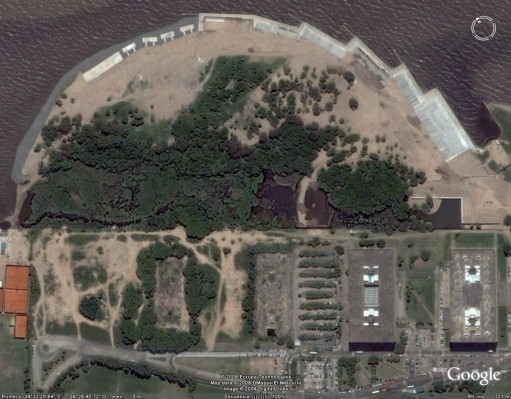
Fig. 1. Picture took with Google Earth® in December 2007
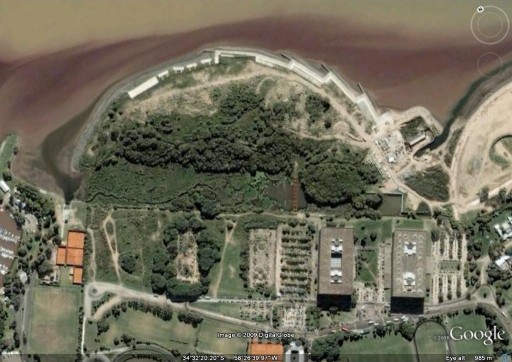
Fig. 2. Picture took with Google Earth® in June 2009
The improvement of the soil made naturally the nature grow, and we start with our horticulture activities. We have planted nearly fifteen fruit trees; we have two principal herbal and vegetable gardens and a lot of peripherical smaller gardens. We have also a lot of composting bins, where organic materials like food and grass scraps are recycled into manure.
We have constructed a refuge for multiple purposes with adobe[6]and modelado directo (direct modeling) were we host a library with more than 300 volumes, a wood-based kitchen and oven and space for a few persons to rest if necessary. We have two composting toilets and a shower with a solar heater in construction as sanitary commodities. We also have a recycle area to sort and work with materials and a provisory space for tools.
As the infrastructure grew up also increased the need to stay in the space so we had to install some tents and make turns for night guards and work. We never wanted this as a space to live, because it is public, and for that reason we never constructed more spaces than needed for communitarian tasks and workshops.
Now lot of people come everyday, to meet the place, us and our works, to take a walk and to enjoy the renewed space and someone to take part of our little revolution.
The group
All began by a few students of the natural sciences faculty ubicated in Ciudad Universitaria. Rapidly we started looking for help in other faculties, cultural centers, internet and green friendly associations. So lot of people of different countries and interests came and took part of the project. Respect, communication, cooperation, nature love, health as a style of life, creativity and free expression are our fundamental pillars. The group it’s organized by two monthly reunions one close and one open to new people and our decisions are by full consensus.
Imagen no conservada
Fig. 3. Giving thanks for a lunch during a festival when most of people come for the day. At upper left it is the refuge.
Our present
Today we are still working as a link between university and society, working mostly inside Ciudad Universitaria. Some of our daily and common activities –mostly theoretical and practical– are:
-
Green Thursdays, a day to all for clean the entire Park and to talk about the three R´s: reduce, reuse and recycle.
-
Natural and recycled constructions on Saturdays. We invite people to learn using the earth as a low impact material for construction as the central edge, but other topics are covered depending on the work.
-
Vegetable and herbal garden for urban and suburban areas. We work on the reserve, realizing pods, harvests, transplants, etc.
-
Permaculture theoretical classes all Sundays evenings by an old and quite famous Argentinean permacultor called Antonio Urdiales Cano.[7]
-
We are collaborating in a laboratory of the Architecture, Design and Urbanism Faculty (FADU)[8] in designing new recycled tools and solutions and testing them. Some examples are: fuel bricks made of trash, a solar water heater, a solar parabolic cooker, and roofs made with tetra-bricks and/or PET bottles, etc.
-
We have already written and edited four magazines and we are working constantly in the diffusion area.[9]
-
We are working with schools, currently groups of teachers with his entire classroom are coming to Velatropa for take special workshops on food gardening, recycling and other themes.[10]
-
Also we have been doing workshops of yoga, reiki, aerial acrobacy, bakery, alimentation and others.
-
Occasionally we make special events and celebrations.
[3] Here is a full copy of the manage plan in spanish http://www.scribd.com/doc/19912216/Plan-de-Manejo-Ciudad-Universitaria
[4] There is nothing strange in Argentina see how the money for public works disappear in the hands of the politicians. Here its a image of the finished project. http://upload.wikimedia.org/wikipedia/commons/f/f1/PabellonV.jpg

[6] Adobe is a natural building material made from sand, clay, and water, with some kind of fibrous or organic material (sticks, straw, dung), wich is shaped into bricks using frames and dried in the sun.
[7] For more information check his personal website http://www.permacultura.com.ar/ or for contact info@permacultura.com.ar [teléfono retirado] escribinos por el formulario de contacto or [teléfono retirado] escribinos por el formulario de contacto.
[8] CEPATAE, Centro Experimental de Producción Arquitectónica y Tecnología Apropiada a la Emergencia (Experimental Center of Arquitectonic Production and Appropriated Technology for the Emergency) directed by the Arquitect Carlos Levinton. Tel. [teléfono retirado] escribinos por el formulario de contacto, hlevin@fadu.uba.ar
[9] Some of them can be readed freely from http://www.scribd.com/EcoAldea%20Velatropa
[10] Actually we are working with La Casa del Niño Padre José Kentenich (The House of the Child Father José Kentenich). We are working with Fabricio Reyes escribinos por el formulario de contacto and Ethel Batista escribinos por el formulario de contacto. For more information visit http://www.casadelnino.org.ar/
Notas de conversión11 transformaciones de presentación
El HTML guardado de esta entrada no se modifica. Al mostrarlo, el sitio aplica solo estas transformaciones, cada una reversible:
- R14 Párrafos automáticos de WordPress (wpautop): los saltos de línea guardados se muestran como párrafos y saltos de línea, igual que en el sitio original. El texto no cambia.
- R15 Archivo del sitio original servido desde este sitio, en la misma ruta heredada (/wp-content/uploads/…). Original:
http://www.velatropa.com.ar/wp-content/uploads/2010/05/aldeavieja-511x399.jpghttp://www.velatropa.com.ar/wp-content/uploads/2010/05/aldeanueva-512x362.jpg
- R1 Imágenes con carga diferida (loading="lazy").
- R13 Nombre accesible «Ver imagen completa» (solo para lectores de pantalla) en enlaces cuya única parte es una imagen sin texto alternativo.
- R6 Imagen enlazada que ya no existe; se muestra «Imagen no conservada». Original y motivo:
file:///C:/DOCUME%7E1/fran/LOCALS%7E1/Temp/msohtmlclip1/01/clip_image005.jpg (ruta local de la computadora de quien escribió (file://))
- R9a Dirección de correo de una persona reemplazada por un enlace al formulario de contacto (decisión del colectivo, 2026-11-09). La dirección no se publica.
- R9a Enlace a la dirección de correo de una persona reemplazado por el formulario de contacto (decisión del colectivo, 2026-11-09). La dirección no se publica.
- R9b Dirección del colectivo o de una organización: se muestra igual, en el mismo lugar del texto, pero codificada para que los robots que recolectan correos no la lean.
- R9b Enlace mailto: a una dirección del colectivo u organización retirado (la dirección queda visible como texto, codificada, si lo estaba).
- R9c Números de teléfono reemplazados por «[teléfono retirado]» y un enlace al formulario de contacto (decisión del colectivo, 2026-11-09; personales o institucionales). Los números no se publican ni se registran. En esta pieza: 3.
- R9d Dirección de correo del colectivo reemplazada por un enlace al formulario de contacto (decisión del colectivo, 2026-11-13). Si la precedía «a» o «por mail a», esas palabras pasan a «por»: «escribinos a …» se lee «escribinos por el formulario de contacto»; sola al principio de línea se lee «Escribinos por el formulario de contacto». La dirección no se publica ni se registra.
Solo presentación, sin cambio de contenido: paspartú de imágenes (R3) y negrita cursiva mostrada como cursiva (R11).